If you have been prescribed phentermine or are considering it, you probably want to know exactly what it does inside your body. Does phentermine burn fat directly, or does it mainly work by making you less hungry? This is one of the most common questions people ask about this medication, and the answer is more detailed than most sources explain.
Phentermine is one of the most widely prescribed weight loss medications in the United States. It has been used for decades, yet there is still a lot of confusion about how it actually causes weight loss. Understanding the difference between appetite suppression and fat burning matters because it shapes how you use the medication and what results you can realistically expect.
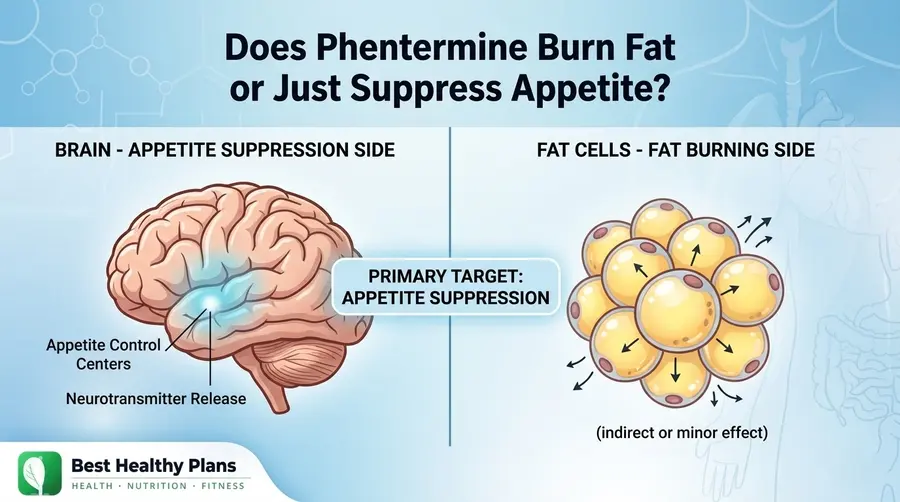
Phentermine works primarily by suppressing appetite, not by directly burning fat. It stimulates the release of chemicals in the brain that reduce hunger signals, which causes you to eat less. The fat loss you experience on phentermine happens as a result of eating fewer calories, not because the drug targets fat cells directly. However, some research suggests it may slightly increase metabolism as well.
This guide breaks down exactly how phentermine works, whether it directly burns fat, and what you can do to get the most out of your approach while keeping safety in mind.
What Is Phentermine and How Is It Classified?
Phentermine is a prescription medication approved by the FDA for short-term weight management in adults. It belongs to a class of drugs called sympathomimetic amines, which means it mimics the effects of stimulant hormones in the body.
It is chemically similar to amphetamines and is classified as a controlled substance because of its stimulant properties. Doctors typically prescribe it for 12 weeks at a time, alongside a reduced-calorie diet and increased physical activity.
Phentermine is available under several brand names, with Adipex-P being one of the most common. It also comes in a combination form called Qsymia, which pairs phentermine with topiramate for extended use.
How Does Phentermine Work in the Body?
To understand whether phentermine burns fat or suppresses appetite, you first need to know how it affects your nervous system.
It Stimulates Neurotransmitter Release
Phentermine triggers the release of norepinephrine, dopamine, and serotonin in the brain. These are chemical messengers that play a role in mood, energy, and hunger regulation.
Norepinephrine is the main driver behind phentermine's effects. When it floods the brain, it activates a fight-or-flight type response, which suppresses the appetite and makes you feel less interested in eating.
It Reduces Hunger Signals
The hypothalamus is the part of the brain that controls hunger. Phentermine works on this region directly, dulling the hunger signals that would normally make you reach for food. Many people taking phentermine report feeling satisfied with much smaller meals.
It May Mildly Increase Metabolism
Because phentermine acts like a stimulant, it can slightly increase heart rate and thermogenesis, which is the process of generating body heat. This may result in a small boost to your resting calorie burn. However, this effect is considered secondary compared to its appetite-suppressing action.
Does Phentermine Burn Fat Directly?
The short answer is no. Phentermine does not directly attack fat cells or cause lipolysis, which is the scientific term for breaking down stored fat. It does not work like a fat-burning supplement that contains thermogenic compounds targeting adipose tissue.
What phentermine does is create a calorie deficit. When you eat significantly less because your appetite is suppressed, your body turns to stored fat for energy. The fat burning is a consequence of the calorie reduction, not a direct effect of the drug.
Think of it this way. Phentermine pulls the hunger lever, you eat less, your body burns fat because it needs fuel. The medication is a tool that changes your eating behavior, and weight loss follows from that behavioral change.
Key distinction: Phentermine is an appetite suppressant that leads to fat loss through calorie restriction, not a fat-burning agent that targets stored body fat directly.
Does Phentermine Burn Fat or Muscle? What It is often observed that
One concern people have when losing weight quickly is whether they are losing fat or muscle. This is a valid concern with any rapid weight loss approach.
Research suggests that phentermine-induced weight loss tends to reduce both fat mass and lean body mass, similar to most calorie-restriction methods. The proportion of muscle lost versus fat lost depends heavily on whether you are doing resistance exercise and eating enough protein during your approach.
If your diet while on phentermine is very low in protein or you are completely sedentary, you are more likely to lose muscle alongside fat. Pairing phentermine use with adequate protein intake and strength training helps preserve muscle while losing fat more selectively.
A structured high-protein diet plan can make a significant difference in how much lean muscle you preserve while losing weight on phentermine.
Why Am I Losing Weight So Fast on Phentermine?
Many people are surprised by how quickly the scale moves in the first few weeks of phentermine approach. There are a few reasons this happens.
- Your appetite drops significantly, so you naturally eat far fewer calories than before.
- Early weight loss often includes water weight, which comes off quickly.
- The stimulant effect of phentermine can increase daily activity levels, adding to the calorie deficit.
- Reduced food intake means less digestive bulk, which also shows on the scale early on.
The rate of loss typically slows after the first month as your body adjusts and water weight stabilizes. Continuing to lose fat after that point depends on how well you maintain your diet and activity habits.
Phentermine Side Effects You Should Know
Because phentermine acts as a stimulant, it comes with a set of common side effects that users should be aware of before starting approach. Understanding these helps you recognize normal responses versus signs that something needs medical attention.
Common Side Effects
- Dry mouth
- Insomnia or difficulty falling asleep
- Increased heart rate or palpitations
- Elevated blood pressure
- Restlessness or nervousness
- Constipation or digestive discomfort
- Headaches
Less Common but Serious Side Effects
- Chest pain or shortness of breath
- Mood changes including irritability or anxiety
- Numbness or tingling in hands or feet
- Severe increase in blood pressure
Phentermine is not suitable for people with heart disease, uncontrolled high blood pressure, hyperthyroidism, glaucoma, or a history of drug abuse. Always discuss your full medical history with your doctor before starting this medication.
Expert Insights: Getting the Most from Phentermine for Weight Loss
Phentermine works best as one part of a broader weight management plan, not as a standalone solution. Here is what health professionals typically recommend to maximize results.
Nutrition Considerations
Aim for a diet rich in lean protein, vegetables, and whole grains.
Even with a suppressed appetite, eat enough to meet your protein needs, typically 0.7 to 1 gram per pound of body weight.
Avoid using the appetite suppression as a reason to skip meals entirely, as this can lead to muscle loss.
Limit processed foods, sugary beverages, and refined carbohydrates.
Choosing the right foods makes a big difference in how phentermine performs. The best foods for weight loss tend to be nutrient-dense, high in protein and fiber, and low in empty calories, which aligns well with how phentermine works.
Exercise Recommendations
- Incorporate at least 150 minutes of moderate-intensity aerobic exercise per week.
- Add 2 to 3 sessions of strength training per week to preserve muscle mass.
- Even light walking after meals can meaningfully increase your daily calorie burn.
If you are new to exercise or finding it hard to stay on track, these tips for staying consistent with fitness can help you build a routine that sticks throughout your phentermine approach period.
Sleep and Stress Management
- Poor sleep can increase hunger hormones and counteract phentermine's appetite-suppressing effects.
- Aim for 7 to 9 hours of quality sleep per night.
- Chronic stress raises cortisol, which promotes fat storage around the abdomen.
- Practices like deep breathing, journaling, or gentle yoga can help manage stress during approach.
Lifestyle Tips
- Take phentermine in the morning to reduce the risk of sleep disruption.
- Stay well hydrated throughout the day, as dry mouth is common and dehydration can be mistaken for hunger.
- Track your food intake to stay aware of your calorie consumption even when not feeling hungry.
Signs Phentermine Is Working
It can be helpful to know what progress looks like beyond the number on the scale. Common signs that phentermine is working include:
- Noticeably reduced hunger between meals
- Feeling full after smaller portions
- Increased energy and motivation to be active
- Gradual, consistent weight reduction over weeks
- Improved confidence and engagement with healthy habits
Individual results vary considerably. Some people respond strongly to phentermine while others experience modest effects. Factors such as starting weight, adherence to diet and exercise, metabolic rate, and the presence of other health conditions all influence outcomes.
Conclusion
Phentermine is a powerful appetite suppressant that helps with weight loss by reducing how much you eat, not by directly attacking fat cells. The fat you lose while on phentermine is a result of eating less and creating a calorie deficit, which pushes your body to burn stored fat for energy.To get the most out of phentermine for weight loss, pair it with a nutritious, protein-rich diet and consistent exercise. Protect your muscle mass, manage your sleep and stress, and use the time on medication to build habits that will serve you long after your prescription ends.
Frequently Asked Questions
Does phentermine burn fat or just suppress appetite?
Phentermine primarily suppresses appetite rather than burning fat directly. It reduces hunger by stimulating neurotransmitters in the brain, causing you to eat less. The fat loss that follows is the result of that reduced calorie intake, not a direct effect on fat cells.
Does phentermine burn fat or muscle?
Phentermine-related weight loss can include both fat and muscle, as with most calorie-deficit methods. Eating adequate protein and doing resistance exercise helps preserve muscle mass while promoting fat loss during approach.
Does phentermine speed up metabolism?
Yes, but only modestly. As a stimulant, phentermine can raise heart rate and slightly increase thermogenesis, which means your body burns marginally more calories at rest. This effect is secondary to its main action of reducing appetite.
How to speed up weight loss on phentermine?
To get better results on phentermine, combine it with a protein-rich, lower-calorie diet and regular exercise. Strength training helps preserve muscle, while cardio increases your calorie deficit. Adequate sleep and stress management also improve weight loss outcomes.
Why am I losing weight so fast on phentermine?
Rapid early weight loss on phentermine is usually a combination of reduced food intake, loss of water weight, and the stimulant-driven increase in daily activity. This initial rate typically slows after the first few weeks as your body adjusts.

Written & Reviewed by
Verified Exercise Physiologist & Sports NutritionistMarcus Sterling, MS, CSCS, CISSN
Exercise Physiologist, Sports Nutritionist & Wellness Specialist
Marcus Sterling, MS, CSCS, CISSN, is an exercise physiologist and certified sports nutritionist with a Master of Science in Kinesiology & Exercise Science from Pennsylvania State University. With a career spanning athletic coaching and supplement research, Marcus focuses on performance optimization, fat loss workouts, sleep architecture, and stress management. At Best Healthy Plans, Marcus reviews exercise protocols, supplement safety, and physical recovery strategies.