
To stop overthinking, you must actively interrupt the cycle of rumination by using grounding techniques, setting time limits for decisions, and focusing on facts over assumptions. Practicing mindfulness and redirecting your energy into physical movement can effectively pull your brain out of a loop. Consistency in these habits allows you to regain control and significantly lower mental stress.
- Identify Triggers: Recognize the moments when your mind starts to spiral.
- Take Action: Use physical movement to break a mental loop.
- Fact Check: Replace "what if" fears with objective reality.
- Set Boundaries: Limit how much time you spend on a single thought.
Early Signs of Overthinking and Immediate Control
Recognizing the early signs of a spiraling mind is essential for maintaining mental clarity. Common indicators include rehearsing past conversations, feeling paralyzed by simple choices, and experiencing a constant sense of "what if" regarding the future. When you notice these patterns, you can gain control by physically changing your environment or engaging in a high focus task. Integrating these awareness checks into a healthy daily routine helps prevent minor concerns from turning into chronic mental hurdles.
The Critical Link Between Overthinking and Anxiety
While overthinking is a mental habit, it often fuels underlying anxiety. Persistent rumination keeps the body in a state of high alert, making it difficult to relax or focus on the present. This mental fatigue can lead to physical symptoms like tension and exhaustion. By learning effective ways to stop overthinking, you effectively lower your baseline anxiety levels. Supporting your mental health through our fitness and lifestyle guide ensures your body is as resilient as your mind.
10 Detailed Steps to Stop Overthinking Today
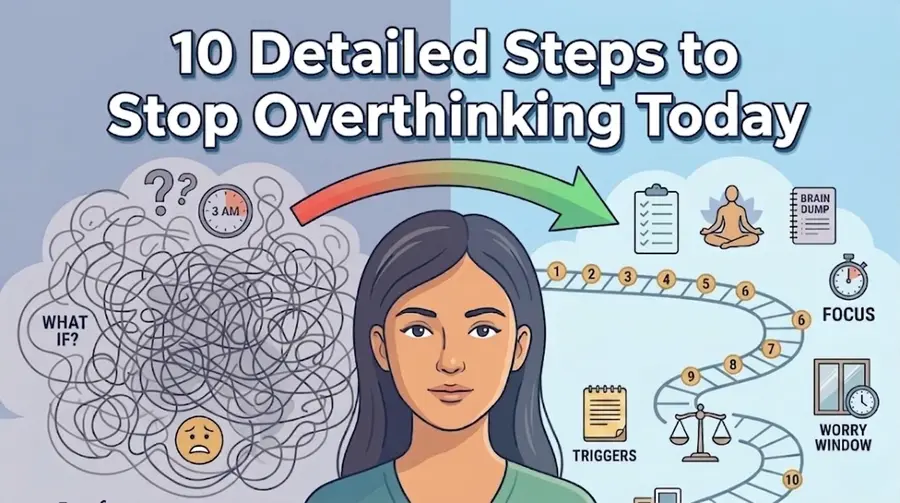
Breaking a long term habit requires a structured approach. Follow these 10 steps to calm your anxious mind and regain control:
- Identify Your Triggers: Note the specific situations or people that cause your mind to start racing.
- Practice the Five Second Rule: When you realize you are ruminating, countdown from five and immediately switch to a different activity.
- Challenge Your Negative Thoughts: Ask yourself if there is actual evidence for your worry or if it is just an assumption.
- Set a Dedicated Worry Window: Give yourself 15 minutes a day to think through concerns: once time is up, move on.
- Focus on Solutions, Not Problems: Shift your energy from "why is this happening" to "what is the next small step I can take."
- Practice the 3-3-3 Grounding Rule: Name three things you see, three sounds you hear, and move three body parts to return to the present.
- Engage in Physical Movement: A quick walk or stretch can physically break the neurological cycle of overthinking.
- Write Down Your Concerns: Use a "brain dump" to get thoughts out of your head and onto paper where they feel more manageable.
- Practice Deep Breathing Exercises: Use slow, controlled breaths to signal to your nervous system that you are safe.
- Focus on the Present Moment: Practice mindfulness by paying full attention to your current task, no matter how small.
Effective Ways to Stop Overthinking at Night
Nighttime often brings the most intense periods of rumination because distractions are low. To stop overthinking at night, establish a ritual where you write down every lingering thought or task for the next day. This helps your brain feel that the information is safe and does not need to be processed immediately. Pairing this with established tips for better sleep and health can significantly improve your ability to fall asleep with a quiet mind.
Long Term Habits for Lasting Mental Peace
Consistency is the key to lasting change. Developing a strong morning routine for success helps you start the day with intention rather than reaction. Furthermore, reviewing a beginner guide to healthy eating can help you choose foods that stabilize your mood and support brain health. When you fill your day with purposeful actions and healthy habits, there is less room for negative thoughts to take root.
Conclusion
Stopping overthinking is about progress, not perfection. By identifying your early signs, following the 10 steps to challenge your thoughts, and maintaining a healthy lifestyle, you can break the cycle of rumination for good. Start by using one grounding technique today and notice the immediate shift in your mental clarity.
Frequently Asked Questions
How do I stop being an overthinker?
You stop being an overthinker by practicing mindfulness and intentionally interrupting the habit of rumination through physical action and fact checking.
What is the 3-3-3 rule for overthinking?
The 3-3-3 rule is a grounding technique where you name three things you see, three sounds you hear, and move three body parts to refocus your mind.
What to drink to stop overthinking?
While no drink is a cure, herbal teas like chamomile or peppermint can help calm the nervous system and reduce the physical tension of an anxious mind.
What is the root cause of overthinking?
The root cause is often a combination of high stress, a desire for control, and a natural tendency to analyze situations to avoid future mistakes.
What are the best foods to reduce stress?
Foods rich in magnesium, such as leafy greens, and omega-3 fatty acids found in fish are excellent for supporting brain health and reducing stress.
.png)
Written by
Sarah Mitchell
Health & Wellness Writer
Sarah Mitchell is a health and wellness writer focused on nutrition, healthy eating, and practical lifestyle topics. She creates well-researched, accessible content designed to help readers explore everyday health and wellness.